Middle School. Made clear.
Touch the variables, bust the misconceptions, and sit down at the kitchen table to actually help with tonight's homework without opening a 400-page textbook.
Featured Model
Kinetic Energy & Temperature
Temperature is a speedometer for particles: race food coloring in hot and cold water, count particle punches on a balloon, and peek inside a thermometer.
Aligned to NGSS MS-PS3-4
Open the Full LessonAll Lessons
Showing 19 of 23 interactive lessons
Physical Science
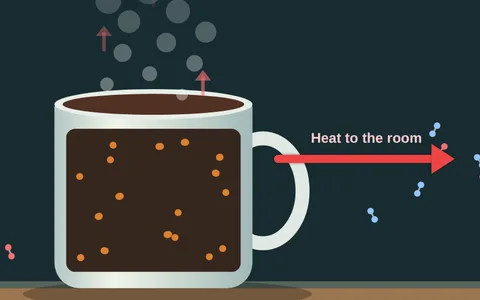
How Heat Transfer Works
6thNGSS MS-PS3-4How heat moves by touch and by waves, until both sides reach thermal equilibrium.
Open lesson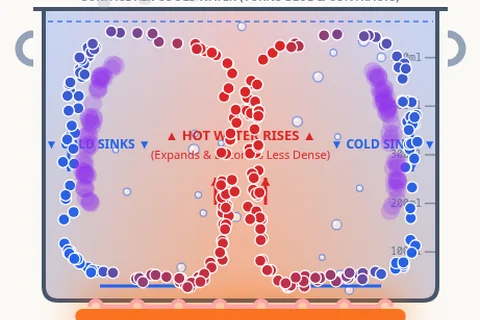
Convection Currents: The Boiling Pot
6thNGSS MS-PS3-4Hot water rises, cool water sinks, and a current loops through the pot.
Open lesson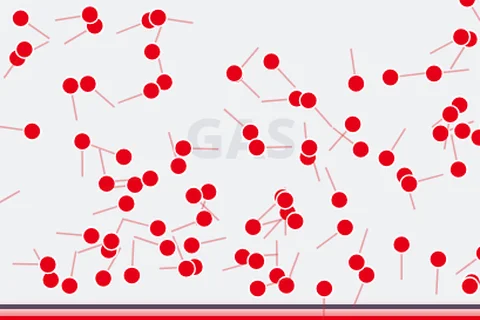
States of Matter & Phase Changes
Grades 6 & 8NGSS MS-PS1-4Watch molecules shake, slide and fly apart as ice melts and water boils.
Open lesson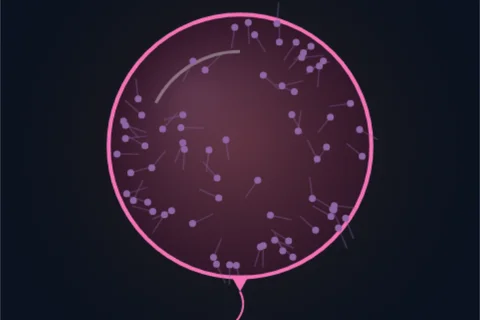
Kinetic Energy & Temperature
Grades 6–8NGSS MS-PS3-4Temperature is a speedometer for particles: race food coloring in hot and cold water, count particle punches on a balloon, and peek inside a thermometer.
Open lesson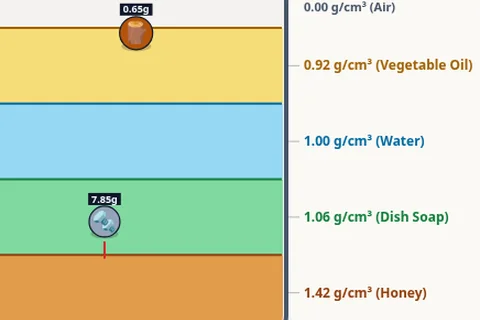
Density & Buoyancy Column
6thNGSS MS-PS1-2Drop objects into four liquids and see why some sink and others float.
Open lesson
Newton's Laws of Motion
Grades 7 & 8NGSS MS-PS2-2Balanced forces, pushes and acceleration, and equal-and-opposite pairs.
Open lesson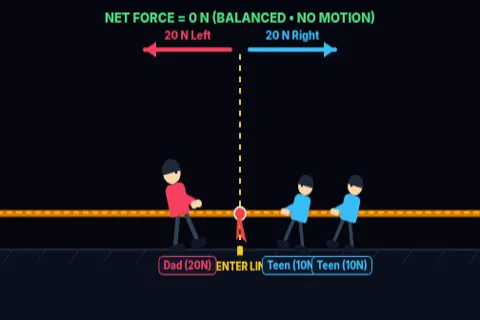
Calculating Net Force: Balanced vs. Unbalanced Forces
Grades 6–8NGSS MS-PS2-2Add forces in the same direction, subtract opposing forces, and see why balanced forces mean no change in motion, not necessarily no motion.
Open lesson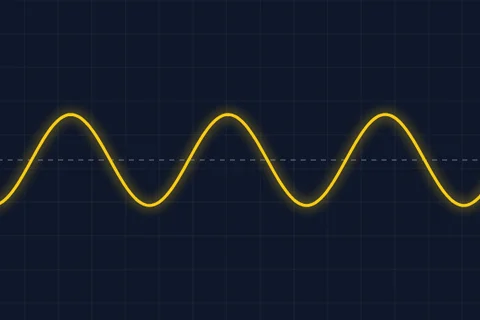
Wave Properties: Sound, Light & Water
Grades 7 & 8NGSS MS-PS4-1Amplitude, frequency and wavelength across sound, light and water.
Open lesson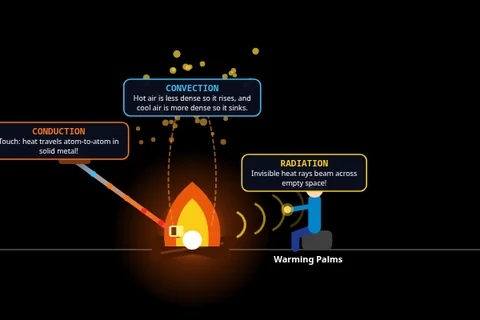
Intro to Heat Transfer: Conduction, Convection & Radiation
Grades 6–8NGSS MS-PS3-3 & MS-PS3-4One campfire, three ways heat moves. Race three spoons in hot soup, then sort real-world examples.
Open lesson
Life Science
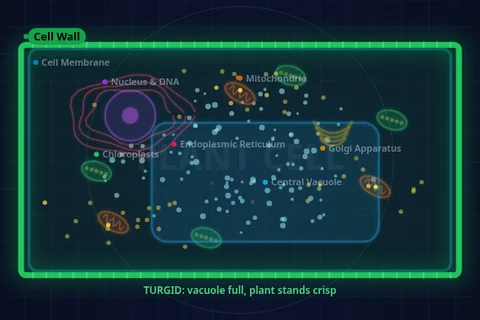
Plant vs. Animal Cells & Organelles
Grades 6 & 7NGSS MS-LS1-2Step inside both cell types, spotlight ten organelles, and wilt a plant by draining its vacuole.
Open lesson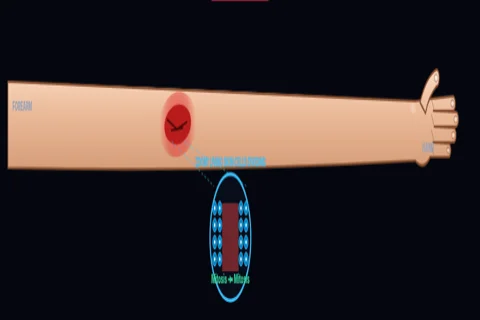
Mitosis: How Body Cells Multiply & Heal
Grades 6–8NGSS MS-LS1-1, MS-LS1-3 & HS-LS1-4Heal a scrape, grow from baby to adult, and follow PMAT to see how one body cell becomes two identical daughter cells.
Open lesson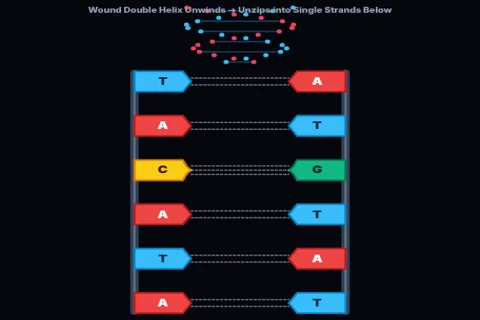
From DNA to Protein: The Molecular Code of Life
Grades 6–8NGSS MS-LS3-1, MS-LS1-1 & HS-LS1-1Match DNA bases, transcribe RNA, build amino acid chains, and explore how changes in the code can affect proteins.
Open lesson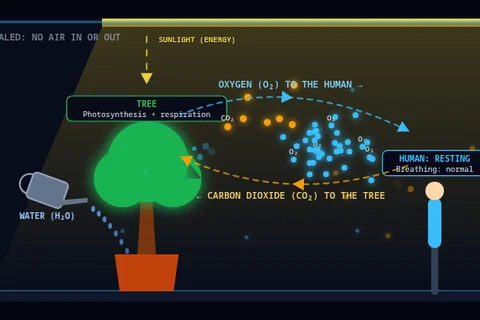
Photosynthesis vs. Cellular Respiration
7thNGSS MS-LS1-6 & MS-LS2-3Seal a tree and a person in a glass chamber and watch them trade oxygen and carbon dioxide.
Open lesson
Earth & Space Science
Solar System: Orbits, Belts & Boundaries
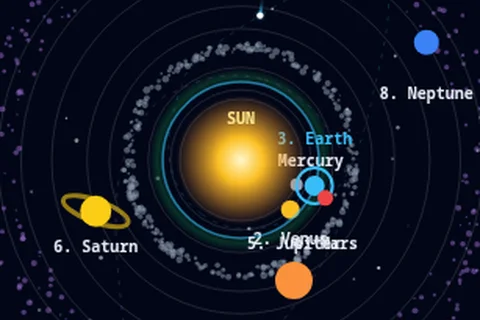
Grades 6 & 7NGSS MS-ESS1-2 & 1-3Planets, belts and comets orbiting the Sun at their real relative speeds.
Open lesson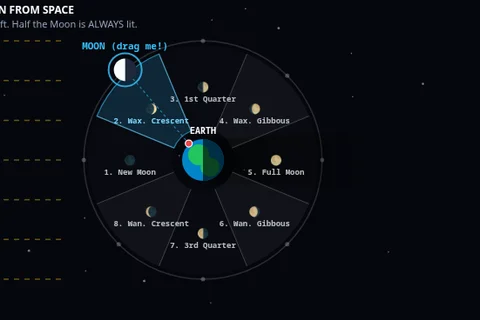
Moon Phases & Eclipses
Grades 6 & 8NGSS MS-ESS1-1Why the Moon changes shape over 29.5 days, plus solar and lunar eclipses.
Open lesson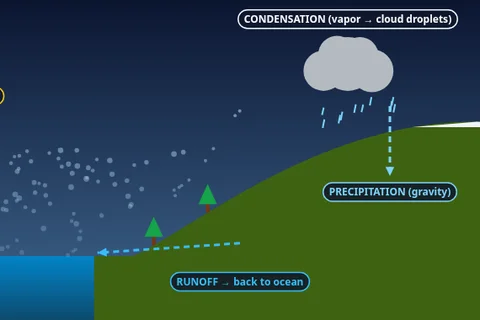
The Water Cycle & Atmospheric Science
Grades 6–8NGSS MS-ESS2-4The Sun lifts water as vapor, clouds form, and gravity brings it back down.
Open lesson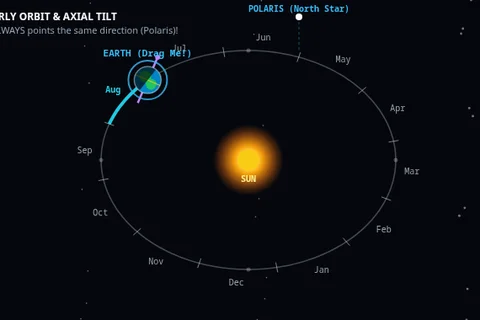
Earth's Tilt & The Seasons
Grades 6 & 8NGSS MS-ESS1-1Drag Earth around the Sun and see why the 23.5° tilt, not distance, makes summer and winter.
Open lesson
Number, Algebra & Graphing
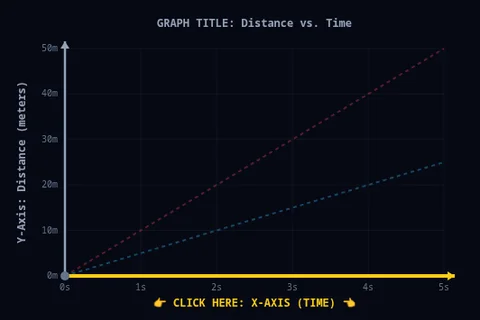
Distance vs. Time: Steeper Slope = Faster Speed
Grades 6–8Common Core MS-PS2-2Label the graph, race vehicles on a track, and see why a steeper slope means a faster speed.
Open lesson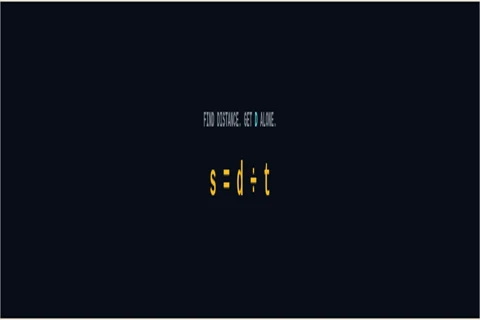
Manipulating the Speed Formula
Grades 6–8Common Core MS-PS2-2A short strategy intro: identify the variable, choose the inverse operation, and keep both sides balanced. Letters only, no calculations.
Open lesson
Support the lessons
Help us keep valuable lessons and resources free for everyone.
Zero ads. 100% free lessons.
Why this exists
It’s 8:30 PM. There’s homework on the table, a frustrated kid beside you, and a textbook that seems to speak a different language. Middle school brings new vocabulary and new ways of explaining things, but parents shouldn’t need a teaching degree to help.
Visual models turn an abstract idea into something you can see and change together. Move a variable, ask what changed, and let the concept click.
Beyond homework, our sister site Dad's Got It has ideas for showing up every day. Explore Family Moments, build routines with Everyday Mastery, or read about letting kids fail to build real resilience.
- • No 20-minute account signups
- • Touch and change the variables directly
- • 100% free core lessons